Find the Source of Persistent Carryback Through Dynamic Contact
As mentioned in previous articles, belt cleaner blade material, design, and installation must be evaluated based on material properties and operating conditions. After installation, check that the cleaner is positioned away from direct material impact, the blade angle meets design specifications, maintenance clearance is sufficient, and the blade contacts the belt at the correct position.
If cleaning performance remains poor despite these checks, the focus should shift from static contact to blade contact during operation.
During shutdown inspections, the blade may appear to fit closely against the belt, with no obvious issues in position or angle. However, once the system runs, an unstable head pulley or uneven belt surface may cause slight vertical movement. This can reduce local contact pressure or cause momentary separation.
Therefore, even when the blade contacts the belt at shutdown, it is important to check whether stable contact pressure is maintained during operation. This can explain why localized cleaning failures and material carryback occur even when static inspections reveal no problems.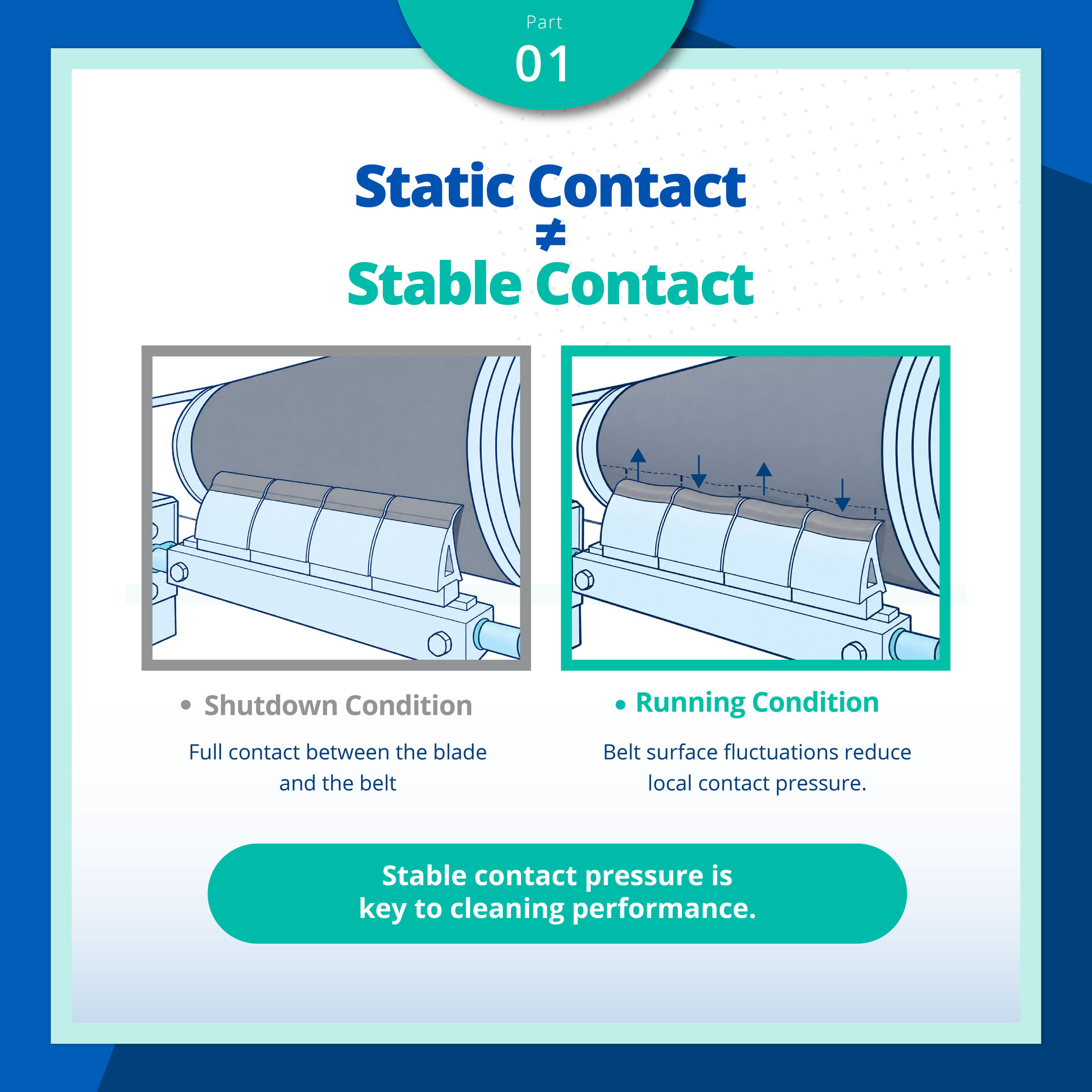
1. Head Pulley Conditions Affect Blade Contact
For primary belt cleaners and those installed near the head pulley, the pulley surface directly affects belt stability as it passes through the cleaning zone. Over time, pulley lagging may develop uneven wear, depressions, surface irregularities, or variations in diameter. These defects can cause the belt surface to fluctuate as it travels around the pulley.
Such variations may be difficult to detect when the system is stopped. During operation, each pulley rotation causes these fluctuations to pass repeatedly through the blade contact zone, changing the contact pressure between the blade and belt.
With adequate pressure, the blade removes adhered material effectively. When the belt moves away from the blade, contact pressure drops, allowing fine particles or sticky material to pass underneath. This eventually leads to visible carryback.
If residual material repeatedly appears in specific areas, inspect the pulley lagging for uneven wear or depressions, and observe belt movement as it passes through the cleaner. This helps identify whether the problem lies with the cleaner or belt instability at the contact point.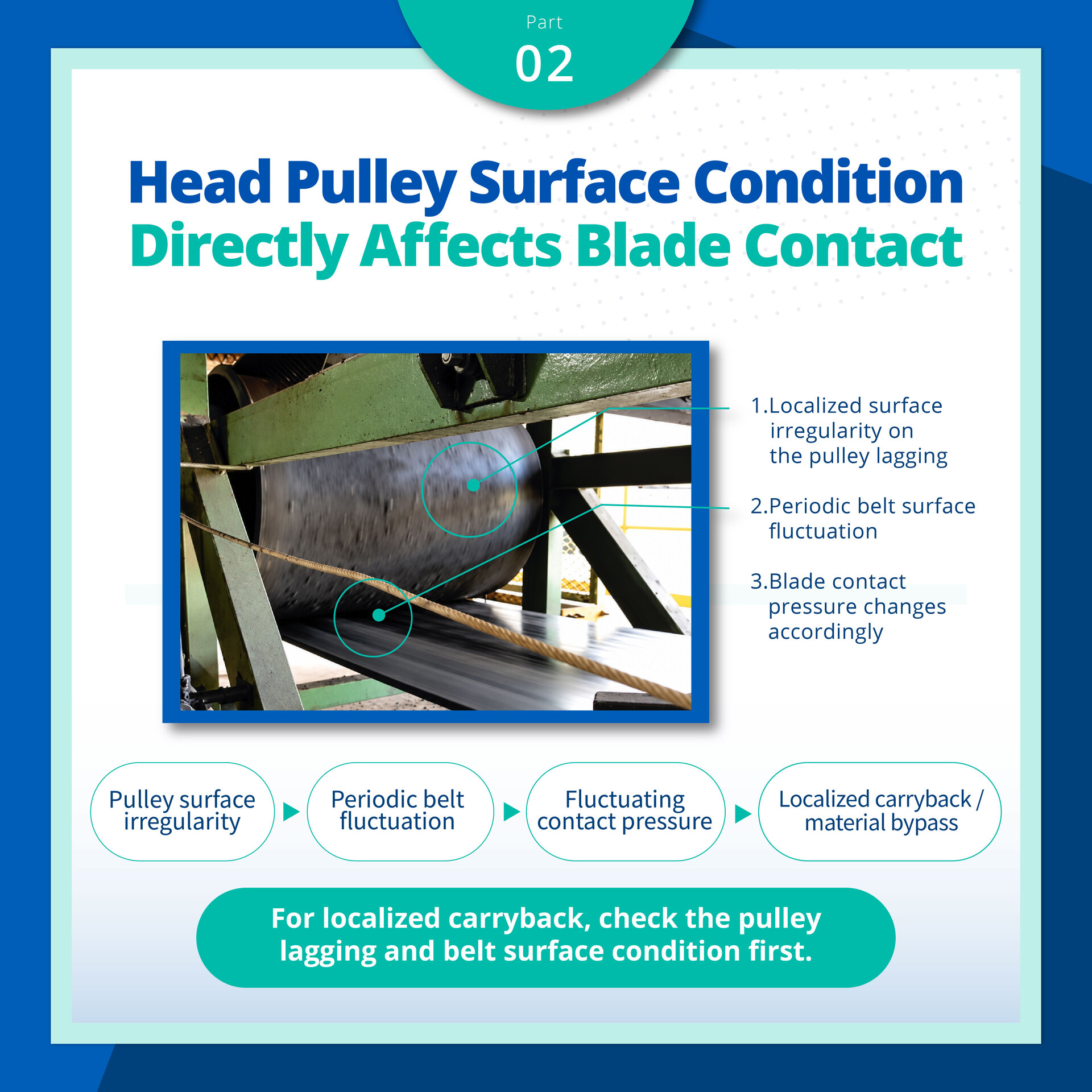
2. Ensure Adequate Support for Secondary Cleaners
Secondary belt cleaners are typically installed on the return side after the belt leaves the head pulley. At this point, adequate belt support near the blade contact zone is essential for stable cleaning. The blade applies force to the belt during operation. Without sufficient support, the belt may deflect, deform, or vibrate, causing contact pressure to fluctuate.
As the belt moves, insufficient contact in certain areas can result in incomplete cleaning and material carryback. During inspection, check for vertical belt movement around the blade and excessive local deformation under the applied force. If support is insufficient, consider modifying the support structure or installing support roller assemblies or hold-down rollers to stabilize the belt near the cleaner.
These adjustments help maintain a stable contact surface and ensure that the blade's preset contact pressure remains effective during operation.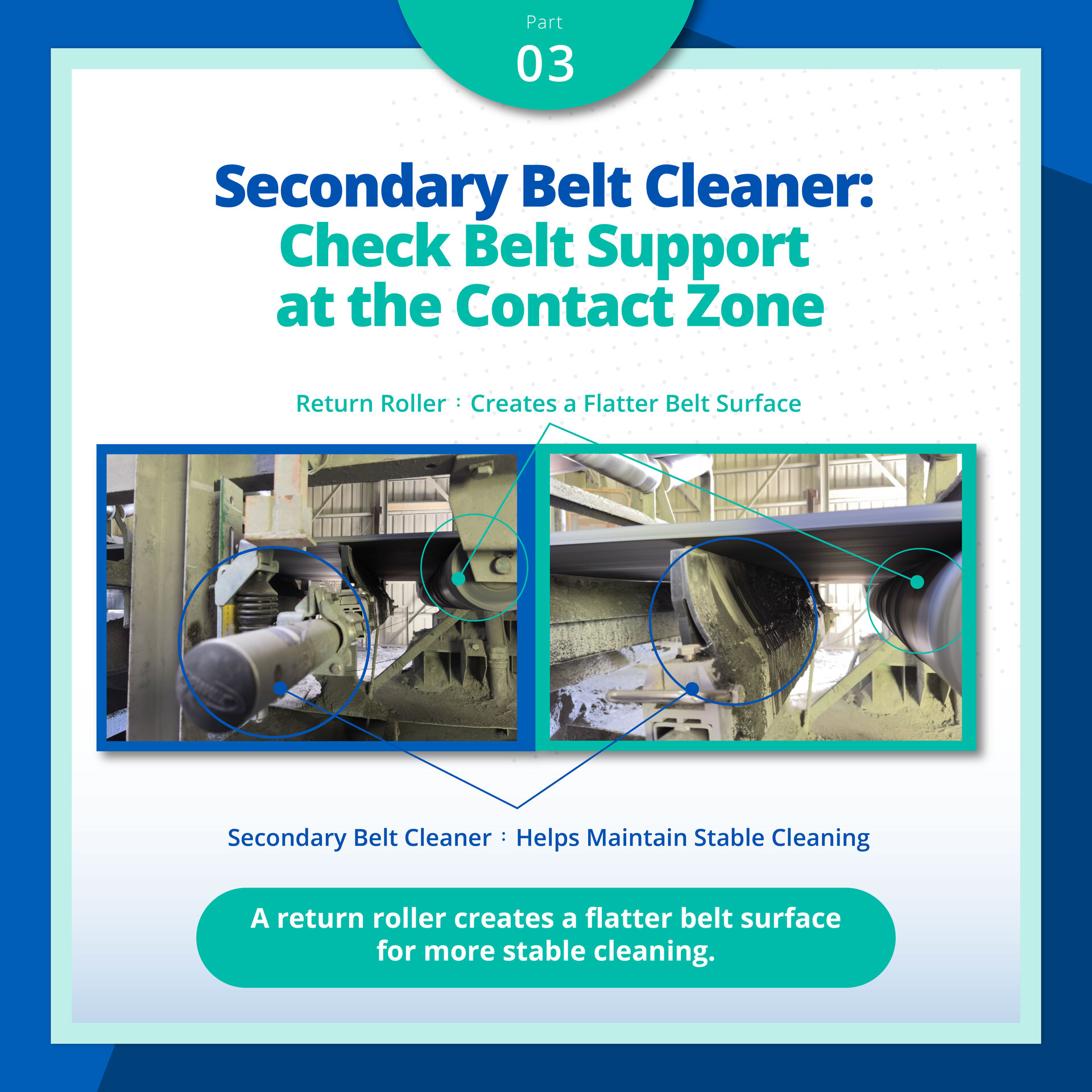
Conclusion:Stable Contact Ensures Effective Cleaning
Shutdown inspections verify the cleaner's position, blade angle, and basic contact alignment. Actual cleaning performance depends on maintaining stable contact pressure between the blade and belt during operation. If cleaning remains poor despite proper installation, check two key areas:
A. Inspect the head pulley lagging and belt surface for recurring height variations.
B. Ensure adequate, stable belt support at the secondary cleaner's contact point.
Checking whether the blade maintains stable contact during operation helps identify the cause of poor cleaning performance and reduce localized cleaning failures and material carryback.